NXP USA Inc. Distributor -ICONE Electronic
ICONE uses cookies and similar technologies to collect information about you and your interactions and communications with our website and services (including session replays and chat session recordings), which information may be shared with third-party service providers. Please view our Privacy Statement and Cookie Statement for more information. By continuing to use our site, you agree to the terms of our Privacy Statement, the use of cookies, tags, pixels, beacons and other technologies, and our Site Terms and Conditions.
Trustpilot
FIRST SHOPPING ORDER

FIRST ORDER

FREE 10% DISCOUNT

EXCLUSIVE TO NEW CUSTOMERS

banner_page

NXP USA Inc.

Alarms, Buzzers, and Sirens

Results: 110021
Filters
    Stacked Scrolling
  • 110021 Results
  • Img
    Pdf
    Part Number
    Manufacturers
    Desc
    In Stock
    Packing
    Rfq
    MRF5S9080NR1
    RF Mosfet 26 V 600 mA 960MHz 18.5dB 80W TO-270 WB-4
    8579
    TO-270AB
    MC68HC11E0CFNE3R
    HC11 HC11 Microcontroller IC 8-Bit 3MHz ROMless 44-PLCC (16.59x16.59)
    9338
    44-LCC (J-Lead)
    SSL2109T/1,118
    LED Driver IC 1 Output AC DC Offline Switcher Flyback, SEPIC, Step-Down (Buck), Step-Up (Boost) Dimming 8-SO
    8756
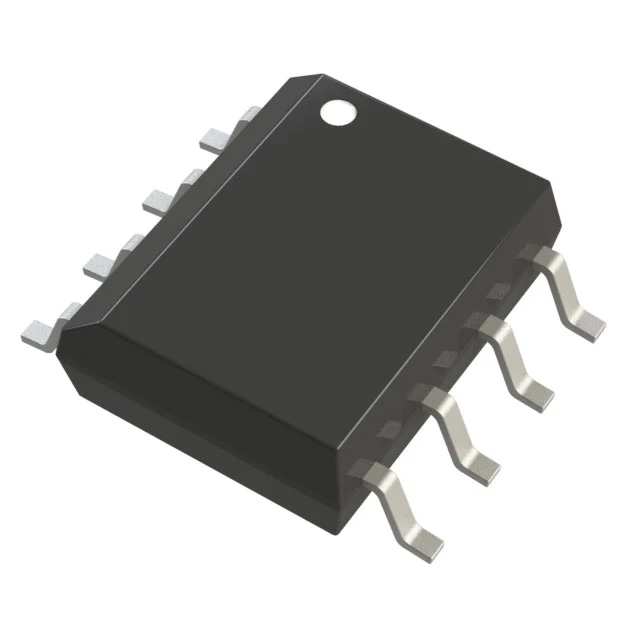
    8-SOIC (0.154", 3.90mm Width)
    MKV11Z128VLF7
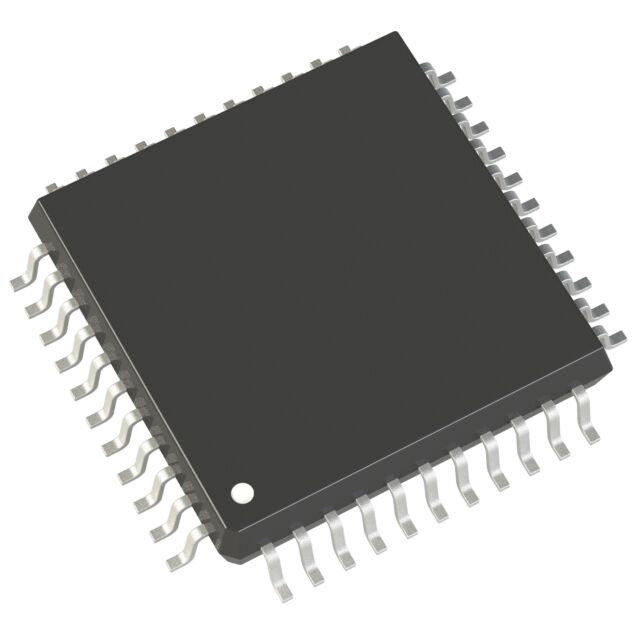
    ARM® Cortex®-M0+ Kinetis KV Microcontroller IC 32-Bit Single-Core 75MHz 128KB (128K x 8) FLASH 48-LQFP (7x7)
    5079
    48-LQFP
    LS2088AXE7TTB
    ARM® Cortex®-A72 Microprocessor IC QorIQ® Layerscape 8 Core, 64-Bit 1.8GHz 1292-FCPBGA (37.5x37.5)
    9593
    1292-BFBGA, FCBGA
    TDA18219HN/C1/S1557
    Video IC Package
    34
    LPC1519JBD100551
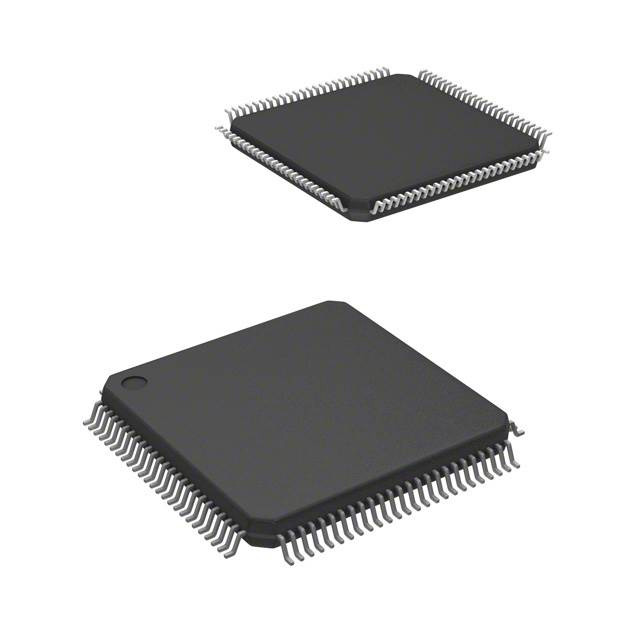
    ARM® Cortex®-M3 LPC15xx Microcontroller IC 32-Bit Single-Core 72MHz 256KB (256K x 8) FLASH 100-LQFP (14x14)

    How do you identify which pin is pin 1 of an IC integrated circuit chip? |ICONECHIP

    For more product unboxing videos, please click on the link


    Relevant Content
    PCF8563T/5,518.jpgPCF8563T/5,518Real Time Clock (RTC) IC Clock/Calendar I²C, 2-Wire Serial 8-SOIC (0.154", 3.90mm Width)TJA1042T/3/1J.jpgTJA1042T/3/1J1/1 Transceiver Half CANbus 8-SO
    TJA1051T/3/1J.jpgTJA1051T/3/1J1/1 Transceiver Half CANbus 8-SOS9KEAZ128AMLH.jpgS9KEAZ128AMLHARM® Cortex®-M0+ Kinetis KEA Microcontroller IC 32-Bit Single-Core 48MHz 128KB (128K x 8) FLASH 64-LQFP (10x10)
    FS32K144UAT0VLLT.jpgFS32K144UAT0VLLTARM® Cortex®-M4F S32K Microcontroller IC 32-Bit Single-Core 112MHz 512KB (512K x 8) FLASH 100-LQFP (14x14)PCA82C250T/YM.jpgPCA82C250T/YM1/1 Transceiver Half CANbus 8-SO
    TJA1043T/1J.jpgTJA1043T/1J1/1 Transceiver Half CANbus 14-SOTJA1044T/1Z.jpgTJA1044T/1Z


    1/1 Transceiver Half CANbus 8-SO

    TJA1021T/20/CM.jpgTJA1021T/20/CM1/1 Transceiver Half CANbus 8-SOPCA9557PW.jpgPCA9557PWI/O Expander 8 I²C, SMBus 400 kHz 16-TSSOP
    TJA1051TK/3/1J.jpgTJA1051TK/3/1J1/1 Transceiver Half CANbus 8-HVSON (3x3)PCA9555PWjpgPCA9555PWI/O Expander 16 I²C, SMBus 400 kHz 24-TSSOP
    MFRC52202HN1,151.jpgMFRC52202HN1,151IC RFID READER 13.56MHZ 32HVQFNPCA9517ADP.jpgPCA9517ADPBuffer, ReDriver 2 Channel 400kHz 8-TSSOP


    7404
    100-LQFP
    A Comprehensive Guide To MC56F8006VLF Microcontroller IC 16-Bit 32MHz 16KB (8K x 16) FLASH 48-LQFP (7x7)

    56800E 56F8xxx Microcontroller IC 16-Bit 32MHz 16KB (8K x 16) FLASH 48-LQFP (7x7)


    MC56F8006/MC56F8002 Digital Signal Controller

    This document applies to parts marked with 2M53M.

    The 56F8006/56F8002 is a member of the 56800E core-based family of digital signal controllers (DSCs). It combines, on a

    single chip, the processing power of a DSP and the functionality of a microcontroller with a flexible set of

    peripherals to create a cost-effective solution. Because of its low cost, configuration flexibility, and compact program

    code, the 56F8006/56F8002 is well-suited for many applications. It includes many peripherals that are especially

    useful for cost-sensitive applications, including:

    • Industrial control

    • Home appliances

    • Smart sensors

    • Fire and security systems

    • Switched-mode power supply and power management

    • Power metering

    • Motor control (ACIM, BLDC, PMSM, SR, and stepper)

    • Handheld power tools

    • Arc detection

    • Medical device/equipment

    • Instrumentation

    • Lighting ballast

    The 56800E core is based on a dual Harvard-style architecture consisting of three execution units operating in parallel, allowing

    as many as six operations per instruction cycle. The MCU-style programming model and optimized instruction set allow

    straightforward generation of efficient, compact DSP and control code. The instruction set is also highly efficient for C compilers

    to enable rapid development of optimized control applications.

    The 56F8006/56F8002 supports program execution from internal memories. Two data operands can be accessed from the on-chip

    data RAM per instruction cycle. The 56F8006/56F8002 also offers up to 40 general-purpose input/output (GPIO) lines,

    depending on peripheral configuration.

    The 56F8006/56F8002 digital signal controller includes up to 16 KB of program flash and 2 KB of unified data/program 

    RAM. Program flash memory can be independently bulk erased or erased in small pages of 512 bytes (256 words).

    On-chip features include:

    • Up to 32 MIPS at 32 MHz core frequency

    • DSP and MCU functionality in a unified, C-efficient architecture

    • On-chip memory

    – 56F8006: 16 KB (8K x 16) flash memory

    – 56F8002: 12 KB (6K x 16) flash memory

    – 2 KB (1K x 16) unified data/program RAM

    • One 6-channel PWM module

    • Two 28-channel, 12-bit analog-to-digital converters (ADCs)

    • Two programmable gain amplifiers (PGA) with gain up to 32x

    • Three analog comparators

    • One programmable interval timer (PIT)

    • One high-speed serial communication interface (SCI) with

    LIN slave functionality

    • One serial peripheral interface (SPI)

    • One 16-bit dual timer (2 x 16 bit timers)

    • One programmable delay block (PDB)

    • One SMBus compatible inter-integrated circuit (I2C) port

    • One real time counter (RTC)

    • Computer operating properly (COP)/watchdog

    • Two on-chip relaxation oscillators — 1 kHz and 8 MHz (400 kHz at standby mode)

    • Crystal oscillator

    • Integrated power-on reset (POR) and low-voltage interrupt (LVI) module

    • JTAG/enhanced on-chip emulation (OnCE™) for unobtrusive, real-time debugging

    • Up to 40 GPIO lines

    • 28-pin SOIC, 32-pin LQFP, 32-pin PSDIP, and 48-pin LQFP packages 


    56F8006/56F8002 Features

    1 Core

    • Efficient 16-bit 56800E family digital signal controller (DSC) engine with dual Harvard architecture

    • As many as 32 million instructions per second (MIPS) at 32 MHz core frequency

    • 155 basic instructions in conjunction with up to 20 address modes

    • Single-cycle 16  16-bit parallel multiplier-accumulator (MAC)

    • Four 36-bit accumulators, including extension bits

    • 32-bit arithmetic and logic multi-bit shifter

    • Parallel instruction set with unique DSP addressing modes

    • Hardware DO and REP loops

    • Three internal address buses

    • Four internal data buses

    • Instruction set supports DSP and controller functions

    • Controller-style addressing modes and instructions for compact code

    • Efficient C compiler and local variable support

    • Software subroutine and interrupt stack with depth limited only by memory

    • JTAG/enhanced on-chip emulation (EOnCE) for unobtrusive, processor speed–independent, real-time debugging

    2 Operation Range

    • 1.8 V to 3.6 V operation (power supplies and I/O)

    • From power-on-reset: approximately 1.9 V to 3.6 V

    • Ambient temperature operating range:

    — –40 °C to 125 °C

    3 Memory

    • Dual Harvard architecture permits as many as three simultaneous accesses to program and data memory

    • Flash security and protection that prevent unauthorized users from gaining access to the internal flash

    • On-chip memory

    — 16 KB of program flash for 56F8006 and 12 KB of program flash for 56F8002

    — 2 KB of unified data/program RAM

    • EEPROM emulation capability using flash

    4 Interrupt Controller

    • Five interrupt priority levels

    — Three user programmable priority levels for each interrupt source: Level 0, 1, 2

    — Unmaskable level 3 interrupts include: illegal instruction, hardware stack overflow, misaligned data access, SWI3

    instruction. Maskable level 3 interrupts include: EOnCE step counter, EOnCE breakpoint unit, EOnCE trace

    buffer

    — Lowest-priority software interrupt: level LP

    • Allow nested interrupt that higher priority level interrupt request can interrupt lower priority interrupt subroutine

    • The masking of interrupt priority level is managed by the 56800E core

    • One programmable fast interrupt that can be assigned to any interrupt source

    • Notification to system integration module (SIM) to restart clock out of wait and stop states

    • Ability to relocate interrupt vector table

    5 Peripheral Highlights

    • One multi-function, six-output pulse width modulator (PWM) module

    — Up to 96 MHz PWM operating clock

    — 15 bits of resolution

    — Center-aligned and edge-aligned PWM signal mode

    — Phase shifting PWM pulse generation

    — Four programmable fault inputs with programmable digital filter

    — Double-buffered PWM registers

    — Separate deadtime insertions for rising and falling edges

    — Separate top and bottom pulse-width correction by means of software

    — Asymmetric PWM output within both Center Aligned and Edge Aligned operation

    — Separate top and bottom polarity control

    — Each complementary PWM signal pair allows selection of a PWM supply source from:

    – PWM generator

    – Internal timers

    – Analog comparator outputs

    • Two independent 12-bit analog-to-digital converters (ADCs)

    — 2 x 14 channel external inputs plus seven internal inputs

    — Support simultaneous and software triggering conversions

    — ADC conversions can be synchronized by PWM and PDB modules

    — Sampling rate up to 400 KSPS for 10- or 12-bit conversion result; 470 KSPS for 8-bit conversion result

    — Two 16-word result registers

    • Two programmable gain amplifier (PGAs)

    — Each PGA is designed to amplify and convert differential signals to a single-ended value fed to one of the ADC

    inputs

    — 1X, 2X, 4X, 8X, 16X, or 32X gain

    — Software and hardware triggers are available

    — Integrated sample/hold circuit

    — Includes additional calibration features:

    – Offset calibration eliminates any errors in the internal reference used to generate the VDDA/2 output center

    point

    – Gain calibration can be used to verify the gain of the overall datapath

    – Both features require software correction of the ADC result

    • Three analog comparators (CMPs)

    — Selectable input source includes external pins, internal DACs

    — Programmable output polarity

    — Output can drive timer input, PWM fault input, PWM source, external pin output, and trigger ADCs

    — Output falling and rising edge detection able to generate interrupts

    • One dual channel 16-bit multi-purpose timer module (TMR)

    — Two independent 16-bit counter/timers with cascading capability

    — Up to 96 MHz operating clock

    — Each timer has capture and compare and quadrature decoder capability

    — Up to 12 operating modes

    — Four external inputs and two external outputs

    • One serial communication interface (SCI) with LIN slave functionality

    — Up to 96 MHz operating clock

    — Full-duplex or single-wire operation

    — Programmable 8- or 9- bit data format

    — Two receiver wakeup methods:

    – Idle line

    – Address mark

    — 1/16 bit-time noise detection

    • One serial peripheral interface (SPI)

    — Full-duplex operation

    — Master and slave modes

    — Programmable length transactions (2 to 16 bits)

    — Programmable transmit and receive shift order (MSB as first or last bit transmitted)

    — Maximum slave module frequency = module clock frequency/2

    • One inter-integrated Circuit (I2C) port

    — Operates up to 400 kbps

    — Supports master and slave operation

    — Supports 10-bit address mode and broadcasting mode

    — Supports SMBus, Version 2

    • One 16-bit programmable interval timer (PIT)

    — 16 bit counter with programmable counter modulo

    — Interrupt capability

    • One 16-bit programmable delay block (PDB)

    — 16 bit counter with programmable counter modulo and delay time

    — Counter is initiated by positive transition of internal or external trigger pulse

    — Supports two independently controlled delay pulses used to synchronize PGA and ADC conversions with input

    trigger event

    — Two PDB outputs can be ORed together to schedule two conversions from one input trigger event

    — PDB outputs can be can be used to schedule precise edge placement for a pulsed output that generates the control

    signal for the CMP windowing comparison

    — Supports continuous or single shot mode

    — Bypass mode supported

    • Computer operating properly (COP)/watchdog timer capable of selecting different clock sources

    — Programmable prescaler and timeout period

    — Programmable wait, stop, and partial powerdown mode operation

    — Causes loss of reference reset 128 cycles after loss of reference clock to the PLL is detected

    — Choice of clock sources from four sources in support of EN60730 and IEC61508:

    – On-chip relaxation oscillator

    – External crystal oscillator/external clock source

    – System clock (IPBus up to 32 MHz)

    – On-chip low power 1 kHz oscillator

    • Real-timer counter (RTC)

    — 8-bit up-counter

    — Three software selectable clock sources

    – External crystal oscillator/external clock source

    – On-chip low-power 1 kHz oscillator

    – System bus (IPBus up to 32 MHz)

    — Can signal the device to exit power down mode

    • Phase lock loop (PLL) provides a high-speed clock to the core and peripherals

    — Provides 3x system clock to PWM and dual timer and SCI

    — Loss of lock interrupt

    — Loss of reference clock interrupt

    • Clock sources

    — On-chip relaxation oscillator with two user selectable frequencies: 400 kHz for low speed mode, 8 MHz for

    normal operation

    — On-chip low-power 1 kHz oscillator can be selected as clock source to the RTC and/or COP

    — External clock: crystal oscillator, ceramic resonator, and external clock source

    • Power management controller (PMC)

    — On-chip regulator for digital and analog circuitry to lower cost and reduce noise

    — Integrated power-on reset (POR)

    — Low-voltage interrupt with a user selectable trip voltage of 1.81 V or 2.31 V

    — User selectable brown-out reset

    — Run, wait, and stop modes

    — Low-power run, wait, and stop modes

    — Partial power down mode

    • Up to 40 general-purpose I/O (GPIO) pins

    — Individual control for each pin to be in peripheral or GPIO mode

    — Individual input/output direction control for each pin in GPIO mode

    — Hysteresis and configurable pullup device on all input pins

    — Configurable slew rate and drive strength and optional input low pass filters on all output pins

    — 20 mA sink/source current

    • JTAG/EOnCE debug programming interface for real-time debugging

    — IEEE 1149.1 Joint Test Action Group (JTAG) interface

    — EOnCE interface for real-time debugging

    6 Power Saving Features

    • Three low power modes

    — Low-speed run, wait, and stop modes: 200 kHz IP bus clock provided by ROSC

    — Low-power run, wait, and stop modes: clock provided by external 32–38.4 kHz crystal

    — Partial power down mode

    • Low power external oscillator can be used in any low-power mode to provide accurate clock to active peripherals

    • Low power real time counter for use in run, wait, and stop modes with internal and external clock sources

    • 32 s typical wakeup time from partial power down modes

    • Each peripheral can be individually disabled to save power


    NXP Electronics components unboxing,humidity card changed color chip can used?


    28
    48-LQFP
    XPC8240LVV200E
    PowerPC 603e Microprocessor IC MPC82xx 1 Core, 32-Bit 200MHz 352-TBGA (35x35)
    4246
    352-LBGA
    MRF6P24190HR6
    RF Mosfet 28 V 1.9 A 2.39GHz 14dB 40W NI-1230
    2481
    NI-1230
    MC68HC908QT2CFQ
    HC08 HC08 Microcontroller IC 8-Bit 8MHz 1.5KB (1.5K x 8) FLASH 8-DFN-EP (4x4)
    7306
    8-VDFN Exposed Pad
    TEA1733CT/N1,118
    Converter Offline Flyback Topology 66.5kHz 8-SO
    5445
    8-SOIC (0.154", 3.90mm Width)
    SPC5743RK1MLU5
    e200z4 Automotive, AEC-Q100 MPC57xx Microcontroller IC 32-Bit Dual-Core 200MHz 2MB (2M x 8) FLASH 176-LQFP (24x24)
    6183
    176-LQFP
    S912ZVM16F1WKFR
    S12Z S12 MagniV Microcontroller IC 16-Bit 50MHz 16KB (16K x 8) FLASH 48-LQFP-EP (7x7)
    7031
    48-LQFP Exposed Pad
    BZV90-C3V0115
    Zener Diode 3 V 1.5 W ±5% Surface Mount SOT-223
    3597
    TO-261-4, TO-261AA
    MKM34Z128ACLL5557
    KINETIS KM34: 50MHZ CORTEX-M0+ M
    8299
    A Comprehensive Guide To MC56F8027VLHR Microcontroller IC 16-Bit 32MHz 32KB (16K x 16) FLASH 64-LQFP (10x10)

    56800E 56F8xxx Microcontroller IC 16-Bit 32MHz 32KB (16K x 16) FLASH 64-LQFP (10x10)


    56F8037/56F8027 Description

    The 56F8037/56F8027 is a member of the 56800E core-based family of Digital Signal Controllers (DSCs).

    It combines, on a single chip, the processing power of a DSP and the functionality of a microcontroller

    with a flexible set of peripherals to create an extremely cost-effective solution. Because of its low cost,

    configuration flexibility, and compact program code, the 56F8037/56F8027 is well-suited for many

    applications. The 56F8037/56F8027 includes many peripherals that are especially useful for industrial

    control, motion control, home appliances, general purpose inverters, smart sensors, fire and security

    systems, switched-mode power supply, power management, and medical monitoring applications.

    The 56800E core is based on a dual Harvard-style architecture consisting of three execution units

    operating in parallel, allowing as many as six operations per instruction cycle. The MCU-style

    programming model and optimized instruction set allow straightforward generation of efficient, compact

    DSP and control code. The instruction set is also highly efficient for C compilers to enable rapid

    development of optimized control applications.

    The 56F8037/56F8027 supports program execution from internal memories. Two data operands can be

    accessed from the on-chip data RAM per instruction cycle. The 56F8037/56F8027 also offers up to 53

    General Purpose Input/Output (GPIO) lines, depending on peripheral configuration.

    The 56F8037 Digital Signal Controller includes 64KB of Program Flash and 8KB of Unified

    Data/Program RAM. The 56F8027 Digital Signal Controller includes 32KB of Program Flash and 4KB of

    Unified Data/Program RAM. Program Flash memory can be independently bulk erased or erased in pages.

    Program Flash page erase size is 512 Bytes (256 Words).

    A full set of programmable peripherals—PWM, ADCs, QSCIs, QSPIs, I2C, PITs, Quad Timers, DACs

    and analog comparators—supports various applications. Each peripheral can be independently shut down

    to save power. Any pin in these peripherals can also be used as General Purpose Input/Outputs (GPIOs).


    56F8037/56F8027 Features

    Digital Signal Controller Core

    • Efficient 16-bit 56800E family Digital Signal Controller (DSC) engine with dual Harvard architecture

    • As many as 32 Million Instructions Per Second (MIPS) at 32MHz core frequency

    • Single-cycle 16  16-bit parallel Multiplier-Accumulator (MAC)

    • Four 36-bit accumulators, including extension bits

    • 32-bit arithmetic and logic multi-bit shifter

    • Parallel instruction set with unique DSP addressing modes

    • Hardware DO and REP loops

    • Three internal address buses

    • Four internal data buses

    • Instruction set supports both DSP and controller functions

    • Controller-style addressing modes and instructions for compact code

    • Efficient C compiler and local variable support

    • Software subroutine and interrupt stack with depth limited only by memory

    • JTAG/Enhanced On-Chip Emulation (OnCE) for unobtrusive, processor speed-independent, real-time 


    NXP Electronics components unboxing,humidity card changed color chip can used?


    5622
    64-LQFP
    XPC850DEVR66BU
    MPC8xx Microprocessor IC MPC8xx 1 Core, 32-Bit 66MHz 256-PBGA (23x23)
    1326
    256-BBGA
    MRF6S19100HR5
    RF Mosfet 28 V 900 mA 1.99GHz 16.1dB 22W NI-780H-2L
    1238
    SOT-957A
    MC8640DTHX1000NC
    PowerPC e600 Microprocessor IC MPC86xx 2 Core, 32-Bit 1.0GHz 1023-FCCBGA (33x33)
    1814
    1023-BBGA, FCBGA
    UBA2212CT/N1,518
    Controller
    2367
    MC9S08QE32CFMR
    S08 S08 Microcontroller IC 8-Bit 50MHz 32KB (32K x 8) FLASH 32-HVQFN (5x5)
    3281
    32-VFQFN Exposed Pad
    SPC5746BK1AMMH2
    e200z4 MPC57xx Microcontroller IC 32-Bit Single-Core 120MHz 3MB (3M x 8) FLASH 100-MAPBGA (11x11)
    3163
    100-LFBGA
    CBTD3306D,118
    Bus Switch 1 x 1:1 8-SO
    5
    8-SOIC (0.154", 3.90mm Width)
    PNX9530E/V140557
    SOFTWARE ENABLED VIDEO AND MULTI
    1065
    A Comprehensive Guide To MC9S12XDT512CAG Microcontroller IC 16-Bit 80MHz 512KB (512K x 8) FLASH 144-LQFP (20x20)

    HCS12X HCS12X Microcontroller IC 16-Bit 80MHz 512KB (512K x 8) FLASH 144-LQFP (20x20)


    MC9S12XDP512

    Covers

    S12XD, S12XB & S12XA Families


    Introduction

    The MC9S12XD family will retain the low cost, power consumption, EMC and code-size efficiency

    advantages currently enjoyed by users of Freescale's existing 16-Bit MC9S12 MCU Family.

    Based around an enhanced S12 core, the MC9S12XD family will deliver 2 to 5 times the performance of

    a 25-MHz S12 whilst retaining a high degree of pin and code compatibility with the S12.

    The MC9S12XD family introduces the performance boosting XGATE module. Using enhanced DMA

    functionality, this parallel processing module offloads the CPU by providing high-speed data processing

    and transfer between peripheral modules, RAM, Flash EEPROM and I/O ports. Providing up to 80 MIPS

    of performance additional to the CPU, the XGATE can access all peripherals, Flash EEPROM and the

    RAM block.

    The MC9S12XD family is composed of standard on-chip peripherals including up to 512 Kbytes of Flash

    EEPROM, 32 Kbytes of RAM, 4 Kbytes of EEPROM, six asynchronous serial communications interfaces

    (SCI), three serial peripheral interfaces (SPI), an 8-channel IC/OC enhanced capture timer, an 8-channel,

    10-bit analog-to-digital converter, a 16-channel, 10-bit analog-to-digital converter, an 8-channel

    pulse-width modulator (PWM), five CAN 2.0 A, B software compatible modules (MSCAN12), two

    inter-IC bus blocks, and a periodic interrupt timer. The MC9S12XD family has full 16-bit data paths

    throughout.

    The non-multiplexed expanded bus interface available on the 144-pin versions allows an easy interface to

    external memories

    The inclusion of a PLL circuit allows power consumption and performance to be adjusted to suit

    operational requirements. System power consumption can be further improved with the new “fast exit from

    stop mode” feature.

    In addition to the I/O ports available in each module, up to 25 further I/O ports are available with interrupt

    capability allowing wake-up from stop or wait mode.

    Family members in 144-pin LQFP will be available with external bus interface and parts in 112-pin LQFP

    or 80-pin QFP package without external bus interface. See Appendix E Derivative Differencesfor package

    options.


    MC9S12XD/B/A Family Features

    • HCS12X Core

    — 16-bit HCS12X CPU

    – Upward compatible with MC9S12 instruction set

    – Interrupt stacking and programmer’s model identical to MC9S12

    – Instruction queue

    – Enhanced indexed addressing

    – Enhanced instruction set

    — EBI (external bus interface)

    — MMC (module mapping control)

    — INT (interrupt controller)

    — DBG (debug module to monitor HCS12X CPU and XGATE bus activity)

    — BDM (background debug mode)

    • XGATE (peripheral coprocessor)

    — Parallel processing module off loads the CPU by providing high-speed data processing and

    transfer

    — Data transfer between Flash EEPROM, RAM, peripheral modules, and I/O ports

    • PIT (periodic interrupt timer)

    — Four timers with independent time-out periods

    — Time-out periods selectable between 1 and 224 bus clock cycles

    • CRG (clock and reset generator)

    — Low noise/low power Pierce oscillator

    — PLL

    — COP watchdog

    — Real time interrupt

    — Clock monitor

    — Fast wake-up from stop mode

    • Port H & Port J with interrupt functionality

    — Digital filtering

    — Programmable rising or falling edge trigger

    • Memory

    — 512, 256 and 128-Kbyte Flash EEPROM

    — 4 and 2-Kbyte EEPROM

    — 32, 16 and 12-Kbyte RAM

    • One 16-channel and one 8-channel ADC (analog-to-digital converter)

    — 10-bit resolution

    — External and internal conversion trigger capabilityFiveFourTwo 1M bit per second,

    CAN 2.0 A, B software compatible modules

    — Five receive and three transmit buffers

    — Flexible identifier filter programmable as 2 x 32 bit, 4 x 16 bit, or 8 x 8 bit

    — Four separate interrupt channels for Rx, Tx, error, and wake-up

    — Low-pass filter wake-up function

    — Loop-back for self-test operation

    • ECT (enhanced capture timer)

    — 16-bit main counter with 7-bit prescaler

    — 8 programmable input capture or output compare channels

    — Four 8-bit or two 16-bit pulse accumulators

    • 8 PWM (pulse-width modulator) channels

    — Programmable period and duty cycle

    — 8-bit 8-channel or 16-bit 4-channel

    — Separate control for each pulse width and duty cycle

    — Center-aligned or left-aligned outputs

    — Programmable clock select logic with a wide range of frequencies

    — Fast emergency shutdown input

    • Serial interfaces

    — SixFourTwo asynchronous serial communication interfaces (SCI) with additional LIN support

    and selectable IrDA 1.4 return-to-zero-inverted (RZI) format with programmable pulse width

    — ThreeTwo Synchronous Serial Peripheral Interfaces (SPI)

    • TwoOne IIC (Inter-IC bus) Modules

    — Compatible with IIC bus standard

    — Multi-master operation

    — Software programmable for one of 256 different serial clock frequencies

    • On-Chip Voltage Regulator

    — Two parallel, linear voltage regulators with bandgap reference

    — Low-voltage detect (LVD) with low-voltage interrupt (LVI)

    — Power-on reset (POR) circuit

    — 3.3-V–5.5-V operation

    — Low-voltage reset (LVR)

    — Ultra low-power wake-up timer

    • 144-pin LQFP, 112-pin LQFP, and 80-pin QFP packages

    — I/O lines with 5-V input and drive capability

    — Input threshold on external bus interface inputs switchable for 3.3-V or 5-V operation

    — 5-V A/D converter inputs

    — Operation at 80 MHz equivalent to 40-MHz bus speed

    • Development support

    — Single-wire background debug™ mode (BDM)

    — Four on-chip hardware breakpoints


    NXP Electronics components unboxing,humidity card changed color chip can used?


    4166
    144-LQFP
    P89V51RC2FBC,557
    8051 89V Microcontroller IC 8-Bit 40MHz 32KB (32K x 8) FLASH 44-TQFP (10x10)
    7727
    44-TQFP
    MRF6S20010NR1
    RF Mosfet 28 V 130 mA 2.17GHz 15.5dB 10W TO-270-2
    3430
    TO-270AA
    MC8640THX1250HC
    PowerPC e600 Microprocessor IC MPC86xx 1 Core, 32-Bit 1.25GHz 994-FCCBGA (33x33)
    5387
    994-BCBGA, FCCBGA
    LPC11U34FHN33/311,
    ARM® Cortex®-M0 LPC11Uxx Microcontroller IC 32-Bit Single-Core 50MHz 40KB (40K x 8) FLASH 32-HVQFN (7x7)

    What are the most common mistakes made when sourcing electronic component? | ICONECHIP

    For more product unboxing videos, please click on the link


    Relevant Content
    TJA1040T/CM.jpgTJA1040T/CM1/1 Transceiver Half CANbus 8-SOMCIMX6Y2CVM08AB.jpgMCIMX6Y2CVM08ABARM® Cortex®-A7 Microprocessor IC i.MX6 1 Core, 32-Bit 792MHz 289-MAPBGA (14x14)
    LPC1768FBD100K.jpgLPC1768FBD100KARM® Cortex®-M3 LPC17xx Microcontroller IC 32-Bit Single-Core 100MHz 512KB (512K x 8) FLASH 100-LQFP (14x14)MC9S08PA32AVLD.jpgMC9S08PA32AVLDS08 S08 Microcontroller IC 8-Bit 20MHz 32KB (32K x 8) FLASH 44-LQFP (10x10)
    FS32K144HFT0VLLT.jpgFS32K144HFT0VLLTARM® Cortex®-M4F S32K Microcontroller IC 32-Bit Single-Core 80MHz 512KB (512K x 8) FLASH 100-LQFP (14x14)PN7150B0HN/C11002Y.jpgPN7150B0HN/C11002Y

    IC RFID READER 13.56MHZ 40HVQFN

    PCA9509DP.jpgPCA9509DPBuffer, ReDriver 2 Channel 400kHz 8-TSSOPCLRC66303HNY.jpgCLRC66303HNYIC RFID READER 13.56MHZ 32HVQFN
    TJA1057GT/3J.jpgTJA1057GT/3J1/1 Transceiver Half CANbus 8-SOPCF85063ATL/1.jpgPCF85063ATL/1Real Time Clock (RTC) IC Clock/Calendar I²C, 2-Wire Serial 10-XFDFN Exposed Pad
    PCF85163T/1.jpgPCF85163T/1
    REAL-TIME CLOCK AND CALENDAR
    SC16IS752IPW.jpgSC16IS752IPWRS232, RS485 Controller I²C, SPI, UART Interface 28-TSSOP
    TJA1050T/CM.jpgTJA1050T/CM1/1 Transceiver Half CANbus 8-SOPCF8563T/5,518.jpgPCF8563T/5,518Real Time Clock (RTC) IC Clock/Calendar I²C, 2-Wire Serial 8-SOIC (0.154", 3.90mm Width)


    3831
    32-VQFN Exposed Pad

    Please send RFQ , we will respond immediately.

    Product:

    *Contact Name

    * Telephone

    Business Email

    * Company Name

    * Country

    * Quantity