NXP USA Inc. Distributor -ICONE Electronic
ICONE uses cookies and similar technologies to collect information about you and your interactions and communications with our website and services (including session replays and chat session recordings), which information may be shared with third-party service providers. Please view our Privacy Statement and Cookie Statement for more information. By continuing to use our site, you agree to the terms of our Privacy Statement, the use of cookies, tags, pixels, beacons and other technologies, and our Site Terms and Conditions.
Trustpilot
FIRST SHOPPING ORDER

FIRST ORDER

FREE 10% DISCOUNT

EXCLUSIVE TO NEW CUSTOMERS

banner_page

NXP USA Inc.

Alarms, Buzzers, and Sirens

Results: 110021
Filters
    Stacked Scrolling
  • 110021 Results
  • Img
    Pdf
    Part Number
    Manufacturers
    Desc
    In Stock
    Packing
    Rfq
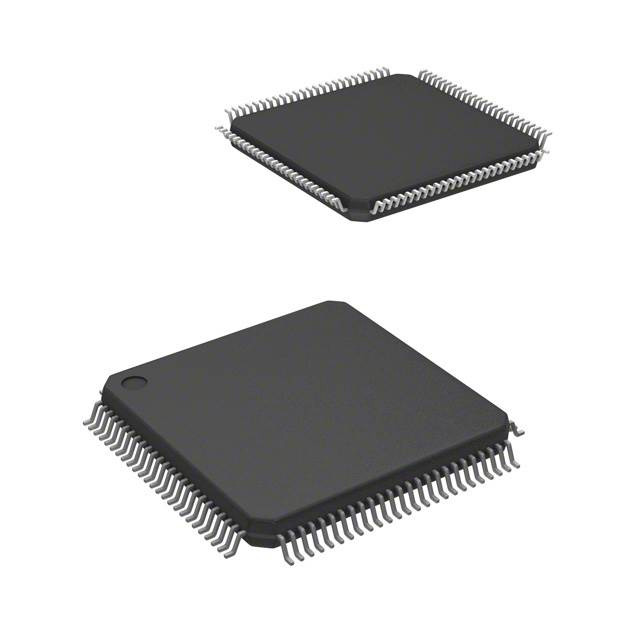
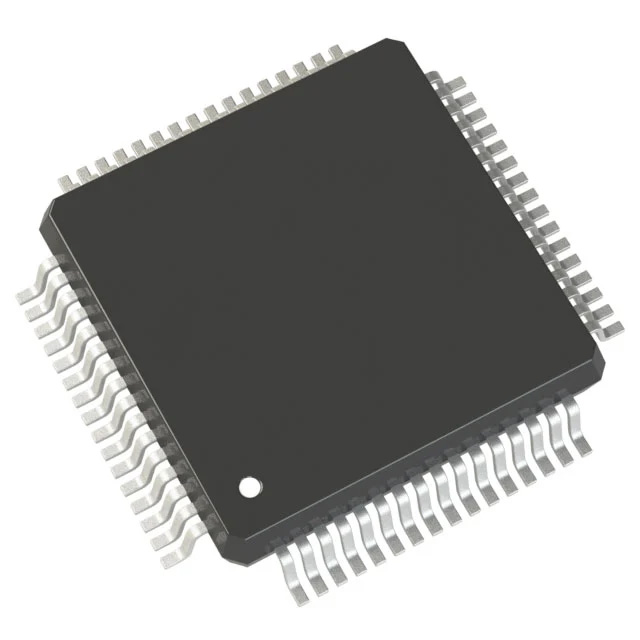
    A Comprehensive Guide To S9S12G96F0CLL Microcontroller IC 16-Bit 25MHz 96KB (96K x 8) FLASH 100-LQFP (14x14)

    12V1 HCS12 Microcontroller IC 16-Bit 25MHz 96KB (96K x 8) FLASH 100-LQFP (14x14)


    Introduction

    The MC9S12G-Family is an optimized, automotive, 16-bit microcontroller product line focused on

    low-cost, high-performance, and low pin-count. This family is intended to bridge between high-end 8-bit

    microcontrollers and high-performance 16-bit microcontrollers, such as the MC9S12XS-Family. The

    MC9S12G-Family is targeted at generic automotive applications requiring CAN or LIN/J2602

    communication. Typical examples of these applications include body controllers, occupant detection, door

    modules, seat controllers, RKE receivers, smart actuators, lighting modules, and smart junction boxes.

    The MC9S12G-Family uses many of the same features found on the MC9S12XS- and MC9S12P-Family,

    including error correction code (ECC) on flash memory, a fast analog-to-digital converter (ADC) and a

    frequency modulated phase locked loop (IPLL) that improves the EMC performance. 

    The MC9S12G-Family is optimized for lower program memory sizes down to 16k. In order to simplify

    customer use it features an EEPROM with a small 4 bytes erase sector size.

    The MC9S12G-Family deliver all the advantages and efficiencies of a 16-bit MCU while retaining the low

    cost, power consumption, EMC, and code-size efficiency advantages currently enjoyed by users of NXP’s

    existing 8-bit and 16-bit MCU families. Like the MC9S12XS-Family, the MC9S12G-Family run 16-bit

    wide accesses without wait states for all peripherals and memories. The MC9S12G-Family is available in

    100-pin LQFP, 64-pin LQFP, 48-pin LQFP/QFN, 32-pin LQFP and 20-pin TSSOP package options and

    aims to maximize the amount of functionality especially for the lower pin count packages. In addition to

    the I/O ports available in each module, further I/O ports are available with interrupt capability allowing

    wake-up from stop or wait modes.


    Chip-Level Features

    On-chip modules available within the family include the following features:

    • S12 CPU core

    • Up to 240 Kbyte on-chip flash with ECC

    • Up to 4 Kbyte EEPROM with ECC

    • Up to 11 Kbyte on-chip SRAM

    • Phase locked loop (IPLL) frequency multiplier with internal filter

    • 4–16 MHz amplitude controlled Pierce oscillator

    • 1 MHz internal RC oscillator

    • Timer module (TIM) supporting up to eight channels that provide a range of 16-bit input capture,

    output compare, counter, and pulse accumulator functions

    • Pulse width modulation (PWM) module with up to eight x 8-bit channels

    • Up to 16-channel, 10 or 12-bit resolution successive approximation analog-to-digital converter

    (ADC)

    • Up to two 8-bit digital-to-analog converters (DAC)

    • Up to one 5V analog comparator (ACMP)

    • Up to three serial peripheral interface (SPI) modules

    • Up to three serial communication interface (SCI) modules supporting LIN communications

    • Up to one multi-scalable controller area network (MSCAN) module (supporting CAN protocol

    2.0A/B)

    • On-chip voltage regulator (VREG) for regulation of input supply and all internal voltages

    • Autonomous periodic interrupt (API)

    • Precision fixed voltage reference for ADC conversions

    • Optional reference voltage attenuator module to increase ADC accuracy


    2814
    100-LQFP
    XPC823VR81B2T
    PowerPC Microprocessor IC MPC8xx 1 Core, 32-Bit 81MHz 256-PBGA (23x23)
    3369
    256-BBGA
    MRF6P24190HR5
    RF Mosfet 28 V 1.9 A 2.39GHz 14dB 40W NI-1230
    2957
    NI-1230
    MC68HC908GP16CFB
    HC08 HC08 Microcontroller IC 8-Bit 8MHz 16KB (16K x 8) FLASH 44-QFP (10x10)
    7863
    44-QFP
    TEA1733CP/N1,112
    Converter Offline Flyback Topology 66.5kHz 8-DIP
    4498
    8-DIP (0.300", 7.62mm)
    SPC5746RK1MMT5
    e200z4 Automotive, AEC-Q100 MPC57xx Microcontroller IC 32-Bit Tri-Core 200MHz 4MB (4M x 8) FLASH 252-MAPBGA (17x17)
    2898
    252-LFBGA
    S912ZVM16F1WKF
    S12Z S12 MagniV Microcontroller IC 16-Bit 50MHz 16KB (16K x 8) FLASH 48-LQFP-EP (7x7)
    4243
    48-LQFP Exposed Pad
    FS32K144UAT0VLHT,557
    ARM® Cortex®-M4F S32K Microcontroller IC 32-Bit Single-Core 112MHz 512KB (512K x 8) FLASH 64-LQFP (10x10)
    5093
    64-LQFP
    MPC555LFCZP40
    PowerPC MPC5xx Microcontroller IC 32-Bit Single-Core 40MHz 448KB (448K x 8) FLASH 272-PBGA (27x27)
    1849
    272-BBGA
    A Comprehensive Guide To S9S12XS256J0VAL Microcontroller IC 16-Bit 40MHz 256KB (256K x 8) FLASH 112-LQFP (20x20)

    HCS12X HCS12X Microcontroller IC 16-Bit 40MHz 256KB (256K x 8) FLASH 112-LQFP (20x20)


    MC9S12XS256

    Covers MC9S12XS Family

    MC9S12XS256

    MC9S12XS128

    MC9S12XS64


    Introduction

    The new S12XS family of 16-bit micro controllers is a compatible, reduced version of the S12XE family.

    These families provide an easy approach to develop common platforms from low-end to high-end

    applications, minimizing the redesign of software and hardware.

    Targeted at generic automotive applications and CAN nodes, some typical examples of these applications

    are: Body Controllers, Occupant Detection, Door Modules, RKE Receivers, Smart Actuators, Lighting

    Modules and Smart Junction Boxes amongst many others.

    The S12XS family retains many of the features of the S12XE family including Error Correction Code

    (ECC) on Flash memory, a separate Data-Flash Module for code or data storage, a Frequency Modulated

    Locked Loop (IPLL) that improves the EMC performance and a fast ATD converter.

    S12XS family delivers 32-bit performance with all the advantages and efficiencies of a 16-bit MCU while

    retaining the low cost, power consumption, EMC and code-size efficiency advantages currently enjoyed

    by users of Freescale’s existing 16-bit S12 and S12X MCU families. Like members of other S12X

    families, the S12XS family runs 16-bit wide accesses without wait states for all peripherals and memories.

    The S12XS family is available in 112-pin LQFP, 80-pin QFP, 64-pin LQFP package options and maintains

    a high level of pin compatibility with the S12XE family. In addition to the I/O ports available in each

    module, up to 18 further I/O ports are available with interrupt capability allowing Wake-Up from stop or

    wait modes.

    The peripheral set includes MSCAN, SPI, two SCIs, an 8-channel 24-bit periodic interrupt timer, 8-

    channel 16-bit Timer, 8-channel PWM and up to 16- channel 12-bit ATD converter.

    Software controlled peripheral-to-port routing enables access to a flexible mix of the peripheral modules

    in the lower pin count package options.


    Features

    • 16-bit CPU12X

    — Upward compatible with S12 instruction set with the exception of five Fuzzy instructions

    (MEM, WAV, WAVR, REV, REVW) which have been removed

    — Enhanced indexed addressing

    — Access to large data segments independent of PPAGE

    • INT (interrupt module)

    — Seven levels of nested interrupts

    — Flexible assignment of interrupt sources to each interrupt level.

    — External non-maskable high priority interrupt (XIRQ)

    — The following inputs can act as Wake-up Interrupts

    – IRQ and non-maskable XIRQ

    – CAN receive pins

    – SCI receive pins

    – Depending on the package option up to 20 pins on ports J, H and P configurable as rising or

    falling edge sensitive

    • MMC (module mapping control)

    • DBG (debug module)

    — Monitoring of CPU bus with tag-type or force-type breakpoint requests

    — 64 x 64-bit circular trace buffer captures change-of-flow or memory access information

    • BDM (background debug mode)

    • OSC_LCP (oscillator)

    — Low power loop control Pierce oscillator utilizing a 4MHz to 16MHz crystal

    — Good noise immunity

    — Full-swing Pierce option utilizing a 2MHz to 40MHz crystal

    — Transconductance sized for optimum start-up margin for typical crystals

    • IPLL (Internally filtered, frequency modulated phase-locked-loop clock generation)

    — No external components required

    — Configurable option to spread spectrum for reduced EMC radiation (frequency modulation)

    • CRG (clock and reset generation)

    — COP watchdog

    — Real time interrupt

    — Clock monitor

    — Fast wake up from STOP in self clock mode

    • Memory Options

    — 64, 128 and 256 Kbyte Flash

    — Flash General Features

    – 64 data bits plus 8 syndrome ECC (Error Correction Code) bits allow single bit failure

    correction and double fault detection

    – Erase sector size 1024 bytes

    – Automated program and erase algorithm

    – Protection scheme to prevent accidental program or erase

    – Security option to prevent unauthorized access

    – Sense-amp margin level setting for reads

    — 4 and 8 Kbyte Data Flash space

    – 16 data bits plus 6 syndrome ECC (Error Correction Code) bits allow single bit failure

    correction and double fault detection

    – Erase sector size 256 bytes

    – Automated program and erase algorithm

    — 4, 8 and 12 Kbyte RAM

    • 16-channel, 12-bit Analog-to-Digital converter

    — 8/10/12 Bit resolution

    — 3µs, 10-bit single conversion time

    — Left or right justified result data

    — External and internal conversion trigger capability

    — Internal oscillator for conversion in Stop modes

    — Wake from low power modes on analog comparison > or <= match

    — Continuous conversion mode

    — Multiplexer for 16 analog input channels

    — Multiple channel scans

    — Pins can also be used as digital I/O

    • MSCAN (1 M bit per second, CAN 2.0 A, B software compatible module)

    — 1 Mbit per second, CAN 2.0 A, B software compatible module

    – Standard and extended data frames

    – 0 - 8 bytes data length

    – Programmable bit rate up to 1 Mbps

    — Five receive buffers with FIFO storage scheme

    — Three transmit buffers with internal prioritization

    — Flexible identifier acceptance filter programmable as:

    – 2 x 32-bit

    – 4 x 16-bit

    – 8 x 8-bit

    — Wake-up with integrated low pass filter option

    — Loop back for self test

    — Listen-only mode to monitor CAN bus

    — Bus-off recovery by software intervention or automatically

    — 16-bit time stamp of transmitted/received messages

    • TIM (standard timer module)

    — 8 x 16-bit channels for input capture or output compare

    — 16-bit free-running counter with 8-bit precision prescaler

    — 1 x 16-bit pulse accumulator

    • PIT (periodic interrupt timer)

    — Up to four timers with independent time-out periods

    — Time-out periods selectable between 1 and 224 bus clock cycles

    — Time-out interrupt and peripheral triggers

    — Start of timers can be aligned

    • Up to 8 channel x 8-bit or 4 channel x 16-bit Pulse Width Modulator

    — Programmable period and duty cycle per channel

    — Center- or left-aligned outputs

    — Programmable clock select logic with a wide range of frequencies

    • Serial Peripheral Interface Module (SPI)

    — Configurable for 8 or 16-bit data size

    — Full-duplex or single-wire bidirectional

    — Double-buffered transmit and receive

    — Master or Slave mode

    — MSB-first or LSB-first shifting

    — Serial clock phase and polarity options

    • Two Serial Communication Interfaces (SCI)

    — Full-duplex or single wire operation

    — Standard mark/space non-return-to-zero (NRZ) format

    — Selectable IrDA 1.4 return-to-zero-inverted (RZI) format with programmable pulse widths

    — 13-bit baud rate selection

    — Programmable character length

    — Programmable polarity for transmitter and receiver

    — Receive wakeup on active edge

    — Break detect and transmit collision detect supporting LIN

    • On-Chip Voltage Regulator

    — Two parallel, linear voltage regulators with bandgap reference

    — Low-voltage detect (LVD) with low-voltage interrupt (LVI)

    — Power-on reset (POR) circuit

    — Low-voltage reset (LVR)

    • Low-power wake-up timer (API)

    — Internal oscillator driving a down counter

    — Trimmable to +/-5% accuracy

    — Time-out periods range from 0.2ms to ~13s with a 0.2ms resolution

    • Input/Output

    — Up to 91 general-purpose input/output (I/O) pins depending on the package option and 2 inputonly

    pins

    — Hysteresis and configurable pull up/pull down device on all input pins

    — Configurable drive strength on all output pins

    • Package Options

    — 112-pin low-profile quad flat-pack (LQFP)

    — 80-pin quad flat-pack (QFP)

    — 64-pin low-profile quad flat-pack (LQFP)

    • Operating Conditions

    — Wide single Supply Voltage range 3.135 V to 5.5 V at full performance

    – Separate supply for internal voltage regulator and I/O allow optimized EMC filtering

    — 40MHz maximum CPU bus frequency

    — Ambient temperature range –40°C to 125°C

    — Temperature Options:

    – –40°C to 85°C

    – –40°C to 105°C

    – –40°C to 125°C


    5353
    112-LQFP
    XPC850DEVR50BUR2
    MPC8xx Microprocessor IC MPC8xx 1 Core, 32-Bit 50MHz 256-PBGA (23x23)
    4530
    256-BBGA
    MRF6S19100HR3
    RF Mosfet 28 V 900 mA 1.99GHz 16.1dB 22W NI-780H-2L
    4130
    SOT-957A
    MC8640DTHX1000HC
    PowerPC e600 Microprocessor IC MPC86xx 2 Core, 32-Bit 1.0GHz 1023-FCCBGA (33x33)
    7028
    1023-BBGA, FCBGA
    UBA2212CP/N1,112
    Controller
    5732
    MC9S08PA32AVLCR
    S08 S08 Microcontroller IC 8-Bit 20MHz 32KB (32K x 8) FLASH 32-LQFP (7x7)
    8149
    32-LQFP
    SPC5745BBK1ACKU6
    e200z4 MPC57xx Microcontroller IC 32-Bit Single-Core 160MHz 2MB (2M x 8) FLASH 176-LQFP (24x24)
    8508
    176-LQFP Exposed Pad
    QN9083CUK,019
    System On Chip (SOC) IC *
    5237
    PMBT3904,215
    Bipolar (BJT) Transistor
    3173
    A Comprehensive Guide To S912XDP512J1CAL Microcontroller IC 16-Bit 80MHz 512KB (512K x 8) FLASH 112-LQFP (20x20)

    HCS12X HCS12X Microcontroller IC 16-Bit 80MHz 512KB (512K x 8) FLASH 112-LQFP (20x20)


    Introduction

    The MC9S12XD family will retain the low cost, power consumption, EMC and code-size efficiency

    advantages currently enjoyed by users of Freescale's existing 16-Bit MC9S12 MCU Family.

    Based around an enhanced S12 core, the MC9S12XD family will deliver 2 to 5 times the performance of

    a 25-MHz S12 whilst retaining a high degree of pin and code compatibility with the S12.

    The MC9S12XD family introduces the performance boosting XGATE module. Using enhanced DMA

    functionality, this parallel processing module offloads the CPU by providing high-speed data processing

    and transfer between peripheral modules, RAM, Flash EEPROM and I/O ports. Providing up to80MIPS

    of performance additional to the CPU, the XGATE can access all peripherals, Flash EEPROM and the

    RAM block.

    The MC9S12XD family is composed of standard on-chip peripherals including up to 512 Kbytes of Flash

    EEPROM,32 Kbytes ofRAM, 4 Kbytes ofEEPROM, six asynchronous serial communications interfaces

    (SCI), three serial peripheral interfaces (SPI), an 8-channel IC/OC enhanced capture timer, an 8-channel,

    10-bit analog-to-digital converter, a 16-channel,10-bit analog-to-digital converter, an 8-channel

    pulse-width modulator (PWM), five CAN 2.0 A, B software compatible modules(MSCAN12), two

    inter-IC bus blocks, and a periodic interrupt timer. The MC9S12XD family has full 16-bit data paths

    throughout.

    The non-multiplexed expanded bus interface available on the 144-pin versions allows an easy interface to

    external memories

    The inclusion ofa PLL circuit allows power consumption and performance to be adjusted to suit

    operational requirements. System power consumption can be further improved with the new“fast exit from

    stop mode" feature.

    In addition to the I/O ports available in each module, up to 25 further I/O ports are available with interrupt

    capability allowing wake-up from stop or wait mode.

    Family members in 144-pin LQFP will be available with external bus interface and parts in112-pin LQFP

    or80-pinQFP package without external bus interface. See Appendix E Derivative Differences for package

    options.


    MC9S12XD/B/A Family Features

    •HCS12X Core

    一 16-bit HCS12X CPU

    - Upward compatible with MC9S12instruction set

    -Interrupt stacking and programmer's model identical toMC9S12

    - Instruction queue

    - Enhanced indexed addressing

    - Enhanced instruction set

    一 EBI (external bus interface)

    一 MMC(module mapping control)

    一 INT (interrupt controller)

    一 DBG (debug module to monitor HCS12X CPU and XGATE bus activity)

    一 BDM(background debug mode)

    •XGATE (peripheral coprocessor)

    一 Parallel processing module off loads the CPU by providing high-speed data processing and

    transfer

    一 Data transfer between Flash EEPROM, RAM, peripheral modules, and I/O ports

    ·PIT (periodic interrupt timer)

    一 Four timers with independent time-out periods

    一 Time-out periods selectable between 1 and 224 bus clock cycles

    •CRG (clock and reset generator)

    一 Low noise/low power Pierce oscillator

    一 PLL

    一 COP watchdog

    一 Real time interrupt

    一 Clock monitor

    一 Fast wake-up from stop mode

    •Port H & Port J with interrupt functionality

    一 Digital filtering

    一 Programmable rising or falling edge trigger

    •Memory

    一 512,256 and 128-Kbyte Flash EEPROM

    一 4 and 2-Kbyte EEPROM

    一 32,16 and 12-Kbyte RAM

    •One 16-channel and one 8-channel ADC (analog-to-digital converter)

    一 10-bit resolution

    一 External and internal conversion trigger capabilityFiveFourTwo 1M bit per second,

    CAN 2.0 A, B software compatible modules

    一 Five receive and three transmit buffers

    一 Flexible identifier filter programmable as 2 x 32 bit, 4 x 16 bit, or 8 x 8 bit

    一 Four separate interrupt channels for Rx, Tx, error, and wake-up

    一 Low-pass filter wake-up function

    一 Loop-back for self-test operation

    •ECT (enhanced capture timer)

    一 16-bit main counter with 7-bit prescaler

    一 8 programmable input capture or output compare channels

    一 Four 8-bit or two 16-bit pulse accumulators

    •8 PWM (pulse-width modulator) channels

    一 Programmable period and duty cycle

    一 8-bit 8-channel or 16-bit 4-channel

    一 Separate control for each pulse width and duty cycle

    一 Center-aligned or left-aligned outputs

    一 Programmable clock select logic with a wide range of frequencies

    一 Fast emergency shutdown input

    •Serial interfaces

    一 SixFourTwo asynchronous serial communication interfaces (SCI) with additional LIN support

    and selectable IrDA 1.4 return-to-zero-inverted (RZI) format with programmable pulse width

    一 ThreeTwo Synchronous Serial Peripheral Interfaces (SPI)

    •TwoOne IIC (Inter-IC bus) Modules

    一 Compatible with IIC bus standard

    一 Multi-master operation

    一 Software programmable for one of 256 different serial clock frequencies

    •On-Chip Voltage Regulator

    一 Two parallel, linear voltage regulators with bandgap reference

    一 Low-voltage detect(LVD) with low-voltage interrupt (LVI)

    一 Power-on reset(POR) circuit

    一 3.3-V-5.5-Voperation

    一 Low-voltage reset (LVR)

    一 Ultra low-power wake-up timer

    •144-pin LQFP, 112-pin LQFP, and 80-pin QFP packages

    一 I/O lines with 5-V input and drive capability

    一 Input threshold on external bus interface inputs switchable for 3.3-V or 5-Voperation

    一 5-V A/D converter inputs

    一 Operation at80 MHz equivalent to 40-MHz bus speed

    •Development support

    一 Single-wire background debug™ mode (BDM)

    一 Four on-chip hardware breakpoints


    NXP Electronics components unboxing,humidity card changed color chip can used?


    8975
    112-LQFP
    P89V51RC2FA,512
    8051 89V Microcontroller IC 8-Bit 40MHz 32KB (32K x 8) FLASH 44-PLCC (16.59x16.59)
    2581
    44-LCC (J-Lead)
    MRF6S20010GNR1
    RF Mosfet 28 V 130 mA 2.17GHz 15.5dB 10W TO-270-2 GULL
    201
    TO-270BA
    MC8640THX1067NC
    PowerPC e600 Microprocessor IC MPC86xx 1 Core, 32-Bit 1.067GHz 994-FCCBGA (33x33)
    5167
    994-BCBGA, FCCBGA
    LPC11U34FBD48/311,
    ARM® Cortex®-M0 LPC11Uxx Microcontroller IC 32-Bit Single-Core 50MHz 40KB (40K x 8) FLASH 48-LQFP (7x7)

    What are the most common mistakes made when sourcing electronic component? | ICONECHIP

    For more product unboxing videos, please click on the link


    Relevant Content
    TJA1040T/CM.jpgTJA1040T/CM1/1 Transceiver Half CANbus 8-SOMCIMX6Y2CVM08AB.jpgMCIMX6Y2CVM08ABARM® Cortex®-A7 Microprocessor IC i.MX6 1 Core, 32-Bit 792MHz 289-MAPBGA (14x14)
    LPC1768FBD100K.jpgLPC1768FBD100KARM® Cortex®-M3 LPC17xx Microcontroller IC 32-Bit Single-Core 100MHz 512KB (512K x 8) FLASH 100-LQFP (14x14)MC9S08PA32AVLD.jpgMC9S08PA32AVLDS08 S08 Microcontroller IC 8-Bit 20MHz 32KB (32K x 8) FLASH 44-LQFP (10x10)
    FS32K144HFT0VLLT.jpgFS32K144HFT0VLLTARM® Cortex®-M4F S32K Microcontroller IC 32-Bit Single-Core 80MHz 512KB (512K x 8) FLASH 100-LQFP (14x14)PN7150B0HN/C11002Y.jpgPN7150B0HN/C11002Y

    IC RFID READER 13.56MHZ 40HVQFN

    PCA9509DP.jpgPCA9509DPBuffer, ReDriver 2 Channel 400kHz 8-TSSOPCLRC66303HNY.jpgCLRC66303HNYIC RFID READER 13.56MHZ 32HVQFN
    TJA1057GT/3J.jpgTJA1057GT/3J1/1 Transceiver Half CANbus 8-SOPCF85063ATL/1.jpgPCF85063ATL/1Real Time Clock (RTC) IC Clock/Calendar I²C, 2-Wire Serial 10-XFDFN Exposed Pad
    PCF85163T/1.jpgPCF85163T/1
    REAL-TIME CLOCK AND CALENDAR
    SC16IS752IPW.jpgSC16IS752IPWRS232, RS485 Controller I²C, SPI, UART Interface 28-TSSOP
    TJA1050T/CM.jpgTJA1050T/CM1/1 Transceiver Half CANbus 8-SOPCF8563T/5,518.jpgPCF8563T/5,518Real Time Clock (RTC) IC Clock/Calendar I²C, 2-Wire Serial 8-SOIC (0.154", 3.90mm Width)


    1869
    48-LQFP
    MKL81Z128CBH7R
    ARM® Cortex®-M0+ Kinetis KL8 Microcontroller IC 32-Bit Single-Core 72MHz 128KB (128K x 8) FLASH 64-WLCSP (3.48x3.38)
    3
    64-XFBGA, WLCSP
    MC33771BSP2AER2
    Battery Battery Cell Controller IC Lithium Ion 64-LQFP (10x10)
    7249
    64-LQFP Exposed Pad
    74HC367DB,112
    Buffer, Non-Inverting 2 Element 2, 4 (Hex) Bit per Element 3-State Output 16-SSOP
    2
    16-SSOP (0.209", 5.30mm Width)
    NZX12B133
    Zener Diode
    8617
    A Comprehensive Guide To S9S12GN32F1CTJ Microcontroller IC 16-Bit 25MHz 32KB (32K x 8) FLASH 20-TSSOP

    12V1 HCS12 Microcontroller IC 16-Bit 25MHz 32KB (32K x 8) FLASH 20-TSSOP


    Introduction

    The MC9S12G-Family is an optimized, automotive, 16-bit microcontroller product line focused on

    low-cost, high-performance, and low pin-count. This family is intended to bridge between high-end 8-bit

    microcontrollers and high-performance 16-bit microcontrollers, such as the MC9S12XS-Family. The

    MC9S12G-Family is targeted at generic automotive applications requiring CAN or LIN/J2602

    communication. Typical examples of these applications include body controllers, occupant detection, door

    modules, seat controllers, RKE receivers, smart actuators, lighting modules, and smart junction boxes.

    The MC9S12G-Family uses many of the same features found on the MC9S12XS- and MC9S12P-Family,

    including error correction code (ECC) on flash memory, a fast analog-to-digital converter (ADC) and a

    frequency modulated phase locked loop (IPLL) that improves the EMC performance. 

    The MC9S12G-Family is optimized for lower program memory sizes down to 16k. In order to simplify

    customer use it features an EEPROM with a small 4 bytes erase sector size.

    The MC9S12G-Family deliver all the advantages and efficiencies of a 16-bit MCU while retaining the low

    cost, power consumption, EMC, and code-size efficiency advantages currently enjoyed by users of NXP’s

    existing 8-bit and 16-bit MCU families. Like the MC9S12XS-Family, the MC9S12G-Family run 16-bit

    wide accesses without wait states for all peripherals and memories. The MC9S12G-Family is available in

    100-pin LQFP, 64-pin LQFP, 48-pin LQFP/QFN, 32-pin LQFP and 20-pin TSSOP package options and

    aims to maximize the amount of functionality especially for the lower pin count packages. In addition to

    the I/O ports available in each module, further I/O ports are available with interrupt capability allowing

    wake-up from stop or wait modes.


    Chip-Level Features

    On-chip modules available within the family include the following features:

    • S12 CPU core

    • Up to 240 Kbyte on-chip flash with ECC

    • Up to 4 Kbyte EEPROM with ECC

    • Up to 11 Kbyte on-chip SRAM

    • Phase locked loop (IPLL) frequency multiplier with internal filter

    • 4–16 MHz amplitude controlled Pierce oscillator

    • 1 MHz internal RC oscillator

    • Timer module (TIM) supporting up to eight channels that provide a range of 16-bit input capture,

    output compare, counter, and pulse accumulator functions

    • Pulse width modulation (PWM) module with up to eight x 8-bit channels

    • Up to 16-channel, 10 or 12-bit resolution successive approximation analog-to-digital converter

    (ADC)

    • Up to two 8-bit digital-to-analog converters (DAC)

    • Up to one 5V analog comparator (ACMP)

    • Up to three serial peripheral interface (SPI) modules

    • Up to three serial communication interface (SCI) modules supporting LIN communications

    • Up to one multi-scalable controller area network (MSCAN) module (supporting CAN protocol

    2.0A/B)

    • On-chip voltage regulator (VREG) for regulation of input supply and all internal voltages

    • Autonomous periodic interrupt (API)

    • Precision fixed voltage reference for ADC conversions

    • Optional reference voltage attenuator module to increase ADC accuracy


    8076
    20-TSSOP (0.173
    TEA1522P/N2,112
    Converter Offline Flyback Topology 10kHz ~ 200kHz 8-DIP
    1661
    8-DIP (0.300", 7.62mm)
    MRF6S21100NBR1
    RF Mosfet 28 V 1.05 A 2.11GHz ~ 2.16GHz 14.5dB 23W TO-272 WB-4
    7518
    TO-272BB

    Please send RFQ , we will respond immediately.

    Product:

    *Contact Name

    * Telephone

    Business Email

    * Company Name

    * Country

    * Quantity